


Can Magnets Help Knee Pain?
Knee injuries and chronic conditions can be stubbornly resistant to traditional treatments. In our experience—spanning over 18 months of managing a partial PCL tear, meniscal injury, bone contusion, and subsequently post surgical ligament reconstruction—static magnet therapy for knee pain has played a vital adjunctive role. Beyond pain relief, magnets have helped control inflammation, support bone bruise repair, and most definitely improved sleep quality, making them a valuable tool in any holistic rehabilitation plan.
Magnetic Therapy uses static magnets—often high-strength neodymium magnets—in targeted placements to create steep magnetic field gradients. These gradients modulate over-excited C-nerve fibers, reducing abnormal pain signals before they reach the brain.
Research such as the double-blind trial “Effects of static magnets on chronic knee pain and physical function” showed that wearing magnetic pads over painful knees for two weeks significantly reduced pain and improved function versus sham devices PubMed.
Important to note that the body will adapt to repeated treatments so they become less effective. We found that changing the combinations of the protocols within this article helped.
For a deep dive into the science, visit our page on Magnetic Therapy, or explore our roundup of Best Magnets for Healing.
Where to Place Magnets for Knee Pain
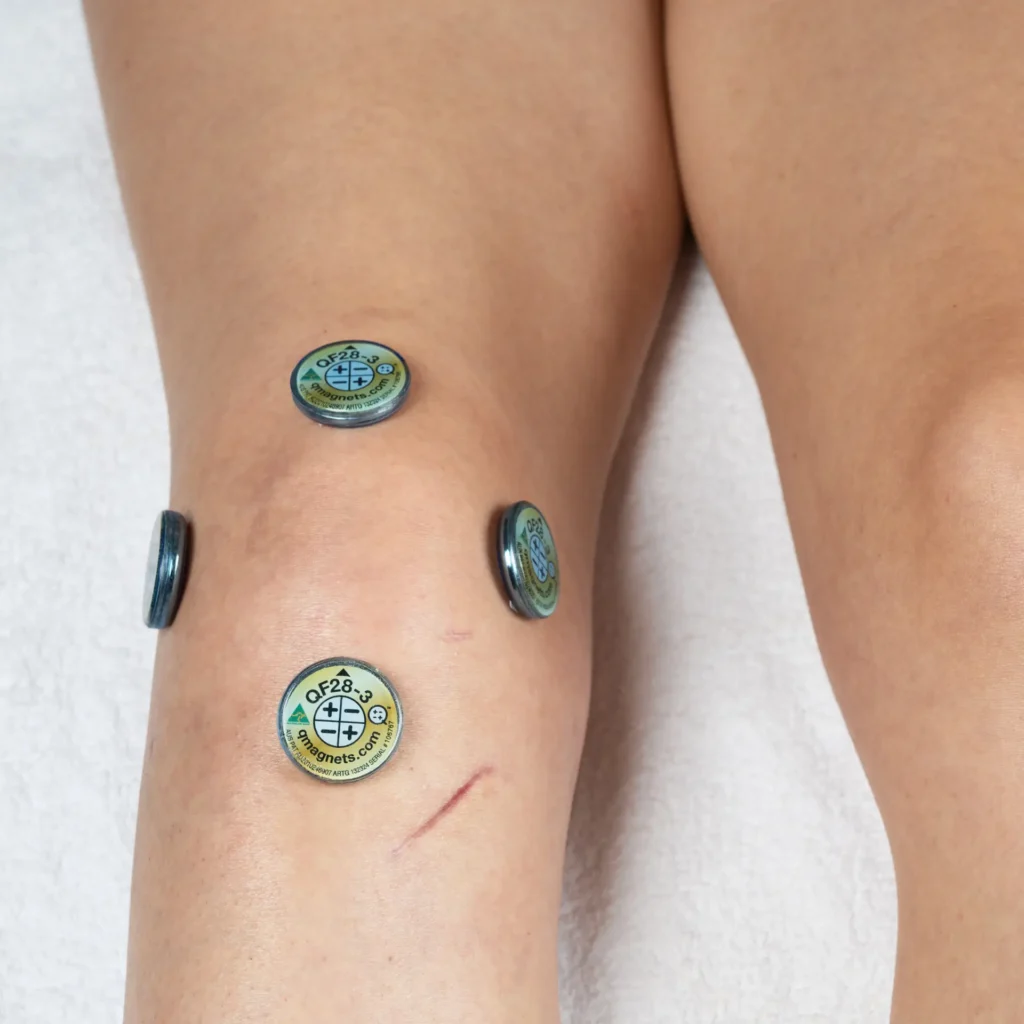
Effective placement is crucial. Our four-site knee protocol covers the main pain generators:
Lateral tibio-femoral joint line
Medial tibio-femoral joint line
Superior to the joint capsule (just above the patella)
Inferior to the joint capsule (over the infrapatellar bursa)
When using Q-Magnets they should be placed and oriented with the arrow pointing upward (towards the head), at least a magnet-width apart to avoid field interference and to avoid the magnets from ‘sticking together’ which can be painful when skin gets trapped in the process.
Each magnet was worn for 2–4 hours (or overnight if tolerated). This primary placement directly envelops the painful joint structure—reducing inflammation, easing capsular tension, and interrupting local nociceptive signals.
We found that QF28-3 magnets are great for placement on the knee. They can be secured with tape that will easily last overnight if needed.
Supporting Bone Contusion Repair
In our knee-pain protocol we also positioned static multipolar magnets directly over areas of bone contusion in an effort to support healing. This approach is grounded in the observations of William Pawluk, M.D., M.Sc., who noted in his 2002 interview in Alternative & Complementary Therapies that static magnetic fields can increase osteoblast activity—the very cells responsible for new bone formation—and thereby promote osteogenesis and accelerate bone healing.
Although experiencing subjective improvements in pain and comfort—with better ability, over time, to bear weight and reduced night-time discomfort—we cannot conclusively prove that the magnets themselves improved the underlying bone contusion. What is clear, however, is that the addition of magnets consistently enhanced pain relief and quality of sleep during the recovery period.
Using Dermatomes To Reduce Pain Signals
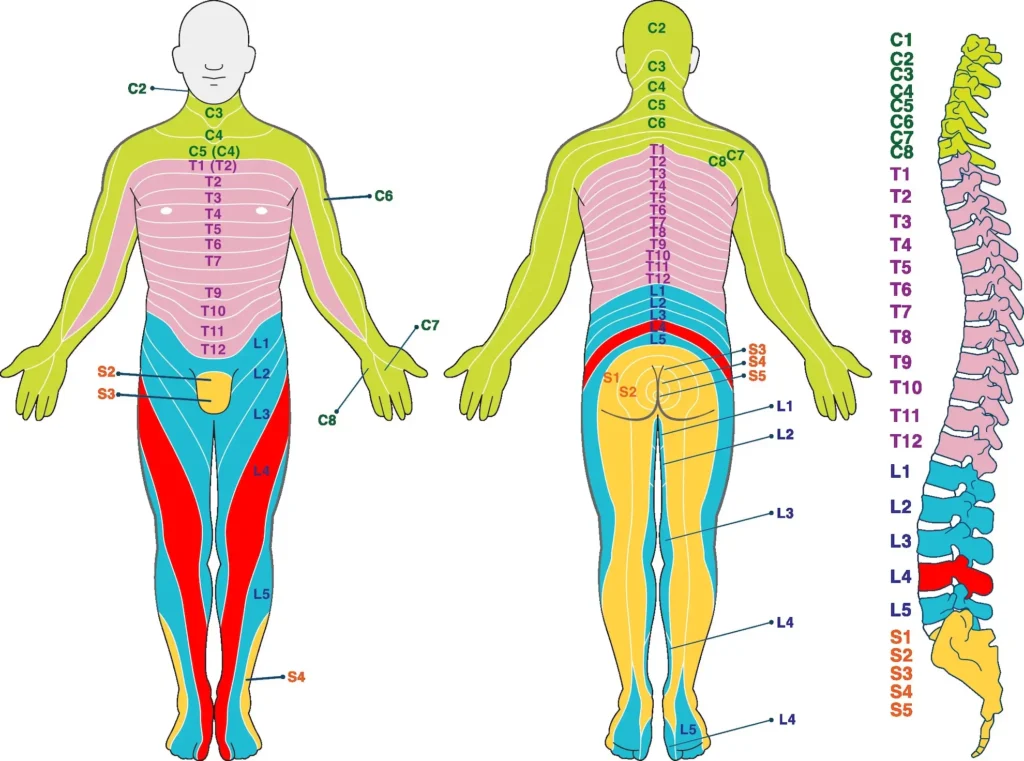
Knee pain signals enter the spinal cord at the L4 dermatome. Placing a magnet over the L3–L4 interspinous space interrupts these nociceptive pathways centrally, thereby lowering perceived pain from the knee.
We use a OF50-3 magnet over the spine at L4.
Four Gates with Magnets for Systemic Relief
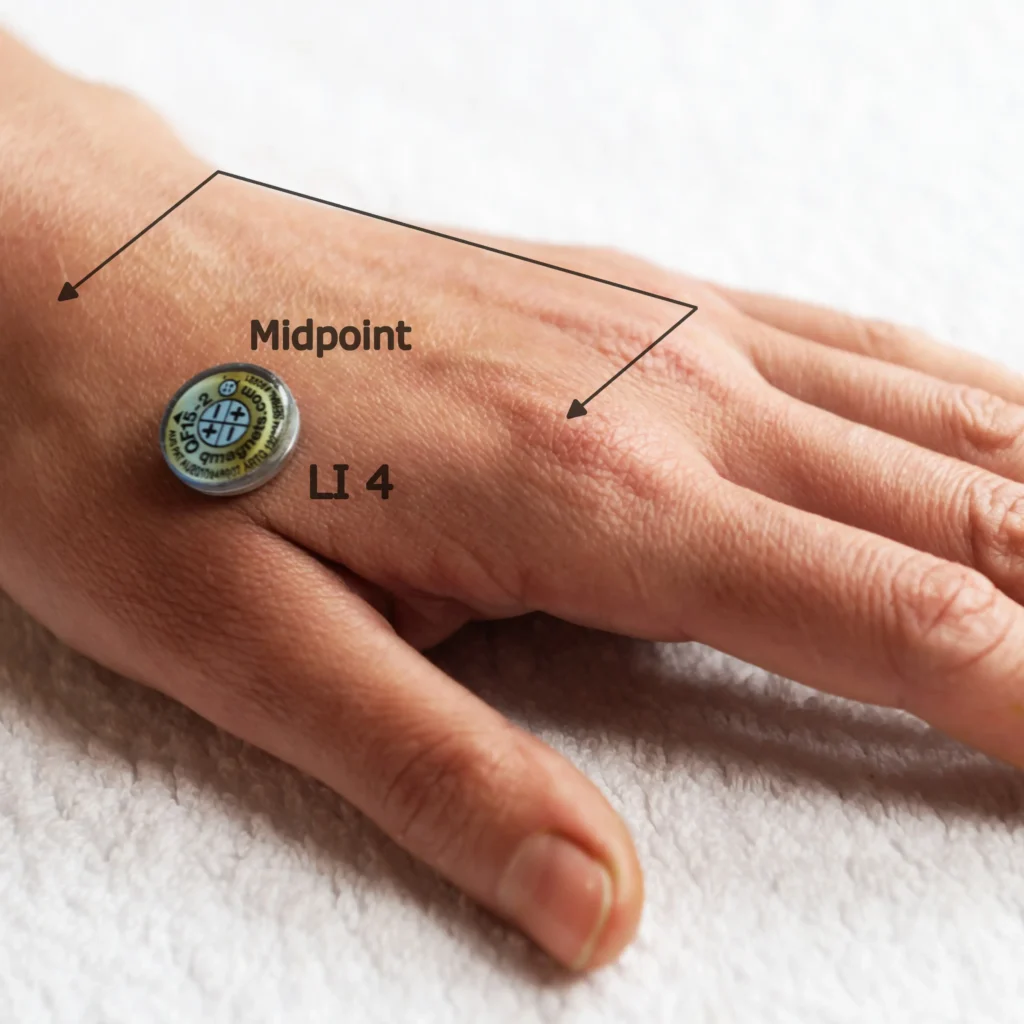
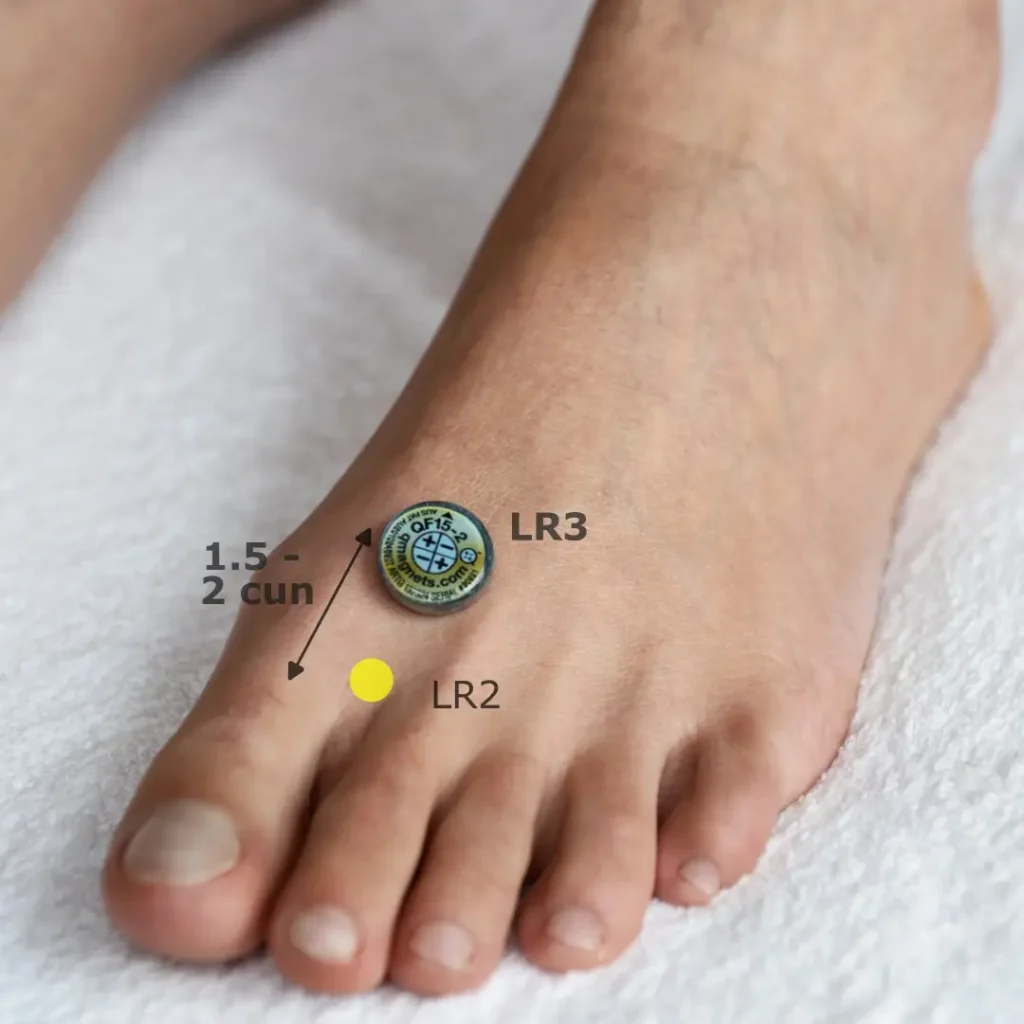
Building on the primary knee placements, we added the classic “Four Gates” to modulate central pain processing. Quadrapolar QF10-2 or QF10-3 magnets were taped for 15–30 minute sessions or overnight on:
- LI 4 (Hegu): between the first and second metacarpals on the hand
- LV 3 (Taichong): between the first and second metatarsals on the foot
This systemic neuromodulation lowers overall pain sensitivity, so your brain “turns down” the volume on the knee pain you’ve already targeted with the primary protocol.
This pairing promotes endorphin release and broad pain relief. Learn more in our guide to Four Gates With Magnets For Pain Relief.
Acupressure Points for Knee Pain
Enhance your magnet protocol with key acupoints:
- SP 9 (Yinlingquan): Below the medial knee, resolves edema and relaxes local muscles; press for 1–2 minutes before magnet placement.
- ST 36 (Zusanli): Four finger-widths below the kneecap, ST 36 has documented anti-inflammatory effects and boosts circulation; magnets here calm swelling and improve joint mobility.
- Xiyan (“Eyes of the Knee”): Two depressions on either side of the patellar ligament; deep acupuncture here outperforms shallow needling for osteoarthritic pain, suggesting magnets over Xiyan may similarly benefit.
Combine these with your knee magnet postitions or rotate them nightly for comprehensive relief.
Note: Q-Magnets magnets are strong so can over-activate an acupuncture point and cause excessive heat as an example in some areas. For long term use it is better to seek advise from a licensed TCM practitioner.
Night-time Pain Management & Better Sleep
- Primary Knee Protocol (4 joint-line magnets)
- Placement of Q28-3 over L4 on the spine.
- Systemic “Four Gates” (LI 4 & LV 3) for 15 minutes
- Local Acupoint Magnets (SP 9, ST 35, Xiyan) for 4–6 hours
FAQs: Magnetic Therapy for Knee Pain
Do magnets really help with knee pain?
Is magnetic therapy good for knee pain?
What are the risks of magnet therapy?
Minimal. Avoid magnets if you have metallic implants (e.g., pacemakers) or open wounds. Skin irritation is rare but can be experienced with the tape used to secure magnets when worn for an extended periods, so not the magnets themselves.
Do magnets really work for pain relief?
How long should I wear magnets on my knee?
Can magnet therapy help repair knee bone bruises?
Where can I buy reliable healing magnets?
Can magnet therapy replace surgery or drugs?
No—magnets are an adjunct. Always follow medical advice for severe injuries or degenerative disease.
How soon will I notice relief?
Many feel reduced pain within 5–15 minutes of correct magnet placement.
Can I use magnets with other therapies?
By integrating magnet therapy for knee pain with acupressure and targeted placements—where to place magnets for knee pain—you harness multiple pathways to reduce discomfort, control inflammation, support healing, and even reclaim restful sleep. Explore our Magnets for Pain Relief page for personal stories and detailed reviews, and bring next-level comfort to your knees.