

Incredible Potential Of Four Gates With Magnets For Pain Relief
I first discovered the incredible potential of Four Gates with magnets for pain relief when I was searching for natural, non-pharmaceutical ways to support my partner’s knee pain both before and after her surgery.
Over time, we discovered the same approach also helped her ease menstrual pain and discomfort she felt from urinary retention. In all these situations, she wanted something that would be gentle on her body, that could either support her medically prescribed treatment or provide pain relief without using medication.
Of course the Four Gates acupuncture points— are a well known and ancient technique combining two specific points, commonly referred to as LI 4 (He Gu) on the hand and LR 3 (Tai Chong) on the foot.
Integrating magnets with these points has become a core part of my pain relief toolbox,, either on it’s own, or in combination with other protocols, and in this article, I will share how and why it might help you too.
Using Four Gates With Magnetic Therapy
The phrase “four gates” often comes up in acupuncture, referring to two points on the hands (both left and right LI 4) and two on the feet (both left and right LR 3).
These points are said to be especially powerful for promoting the smooth flow of qi (energy) throughout the body and for calming a busy mind. Many people prescribe the four gates acupuncture for help with reducing pain and tension in muscles and joints.
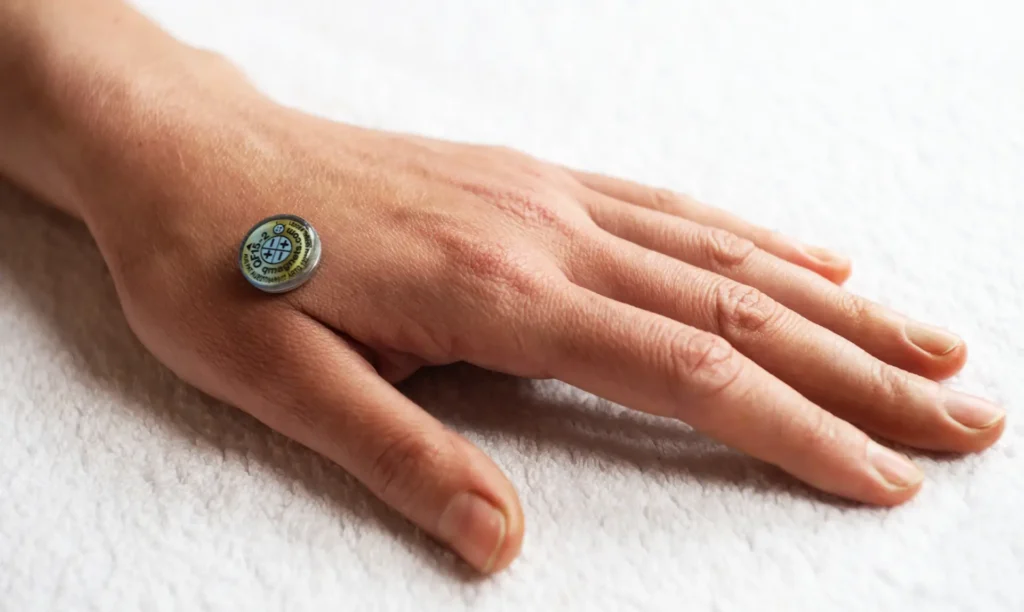
By adding magnets to these same spots, we potentially enhance the circulation and relaxation effects already attributed to classic acupuncture, but without needles and with a simple at-home application that can be worn over-night.
Natural Pain Relief Using Magnets
For me personally, magnets have been the ‘go-to solution’ in circumstances where there is a preference not to use NSAIDs. Whether you’re exploring alternative health practices or just want a break from medication, placing magnets on the LI 4 and LR 3 points can be a good place to begin and most definitely can be used along side other protocols.
Four Gates Acupuncture Points
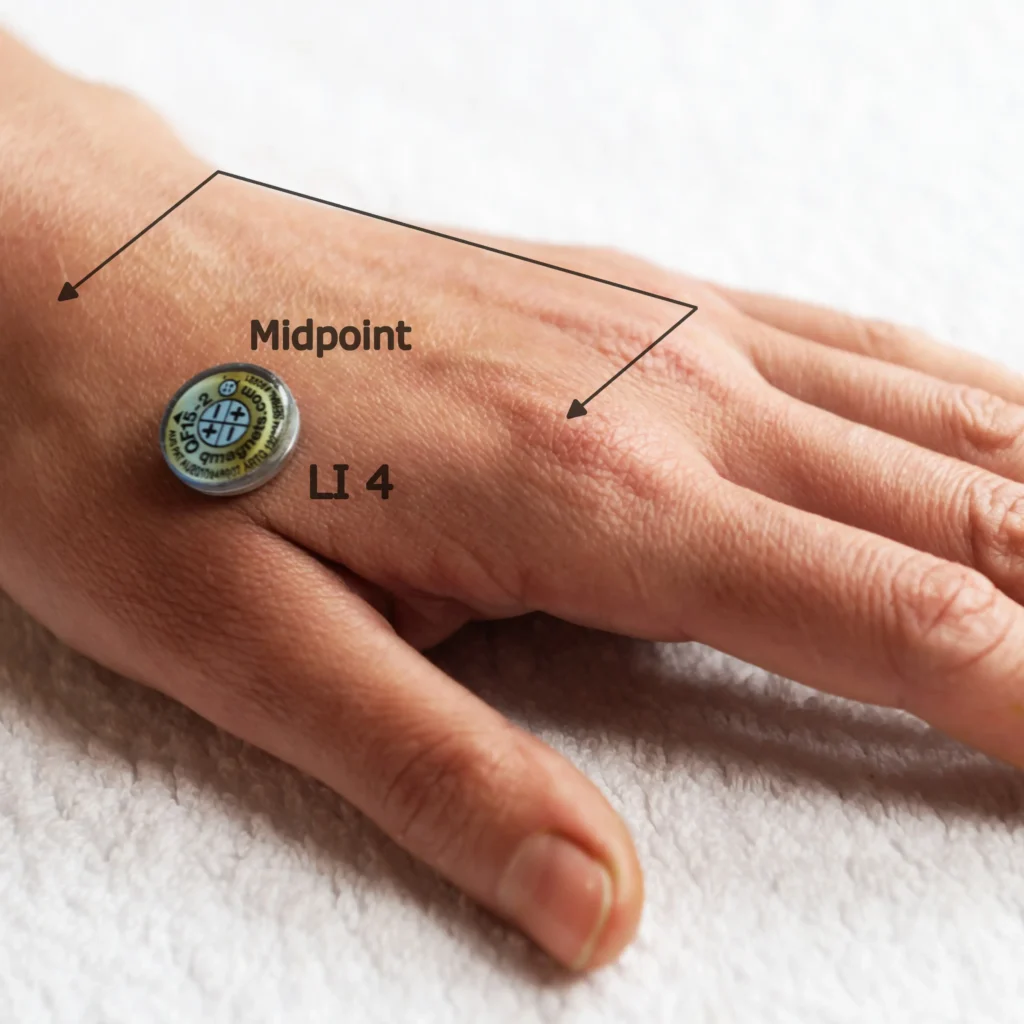
LI 4 (He Gu)
- Location: Commonly found in the fleshy area between the thumb and index finger. You can locate it by bringing your thumb close to your index finger; the point is at the high spot of the bulge of muscle where the bones of the thumb and index finger meet.
- Key Benefits: LI 4 is known for its ability to help clear blockages, soothe pain, and calm an overactive mind. Some refer to it as “The Great Eliminator” because of its reputed capacity to eliminate both physical and emotional tension.
- Cautions: LI 4 should be used with caution in pregnancy or during heavy menstrual flow because it is said to increase circulation and potentially flow in these cases.
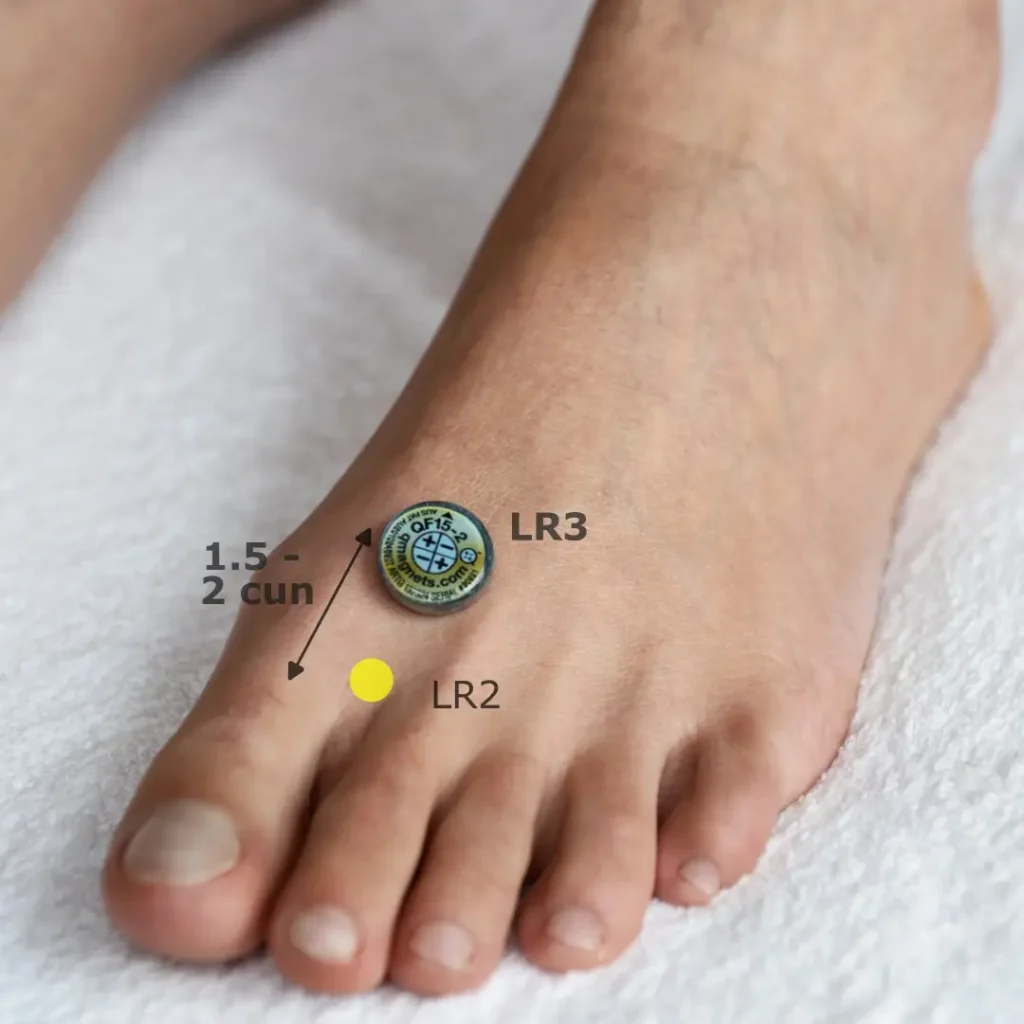
LR 3 (Tai Chong)
- Location: On the foot, in the depression just past the point where the first and second metatarsal bones meet—often described as the top of the foot between the big toe and the second toe.
- Key Benefits: LR 3 helps with stress relief, easing tension, and supporting a calmer state of mind. This point, when paired with LI 4, has potent pain-relieving properties.
- Cautions: The area can sometimes be sensitive, so apply pressure gently if using acupressure before before applying the magnet. .
While LR3 when paired with LI 4 is sometimes used in acupuncture anesthesia protocols, using magnets in stead of needles will not, in my experience give the same intensity of pain relief and should not be considered.
Combining Magnets with the Four Gates
- Magnet Type: A small, high-grade magnet such as a QF10-3 is often enough for a single acupoint, especially on the hands or feet where you are confident of accurately locating the point. If you are dealing with a broader area of pain (for example, if knee inflammation is radiating down into the foot), you might consider using magnets designed for deeper tissue penetration such as QF15-3.
- Placement: Clean and dry the area, then place the magnet so it covers the point completely. Secure with sticky QFix20 pads, or medical-grade tape such as Fixomull Stretch Tape available on Amazon.
- Duration: You can keep a low-profile magnet on these points for up to several hours—some even wear them overnight. If you notice skin irritation from the tape, give the area a rest.
- Frequency: In my experience with knee pain rehabilitation, I recommend using magnets on LI 4 and LR 3 when the pain is most intense.
- Sensitivity: If you are new to magnet therapy, check in with yourself for any redness or irritation due to some reaction to the tape.
Combining Four Gates Acupuncture Points with Magnetic Therapy has benefits beyond pain management. While I have personally used these points and magnets primarily for pain relief, the Four Gates are also known for supporting mental clarity and even digestion, according to many acupuncture traditions.
If you’re looking to incorporate them into an existing wellness routine, these points might help you feel calmer overall—especially during hectic phases of life.
Final Thoughts
Final Thoughts using Four Gates with Magnets offers a gentle, non-invasive option that anyone can try at home. Whether you face knee pain or other conditions, combining magnets with these acupuncture points has real potential as part of a natural pain-management plan. As always, if you have any underlying conditions or questions, consult with a qualified healthcare practitioner to ensure that this method is safe and suitable for you.
If you are among those who prefer not to rely on NSAIDs or are simply curious about new and traditional forms of pain management, combining acupuncture points with magnet therapy is worth considering. From my experience, it’s been an empowering approach—one that complements other treatments in a safe and non-invasive way.